Our Process
We bring order to the archive, clarity to the artist’s story, and purpose to the way the work reaches people. The starting point and pace depend on the practice.
01
Start with the work.
We begin with the art and a conversation about where the artist wants to go. Looking across the work, its history, and the way it is currently presented helps us identify the central ideas, the gaps, and what needs attention first.
02
Bring the archive into order.
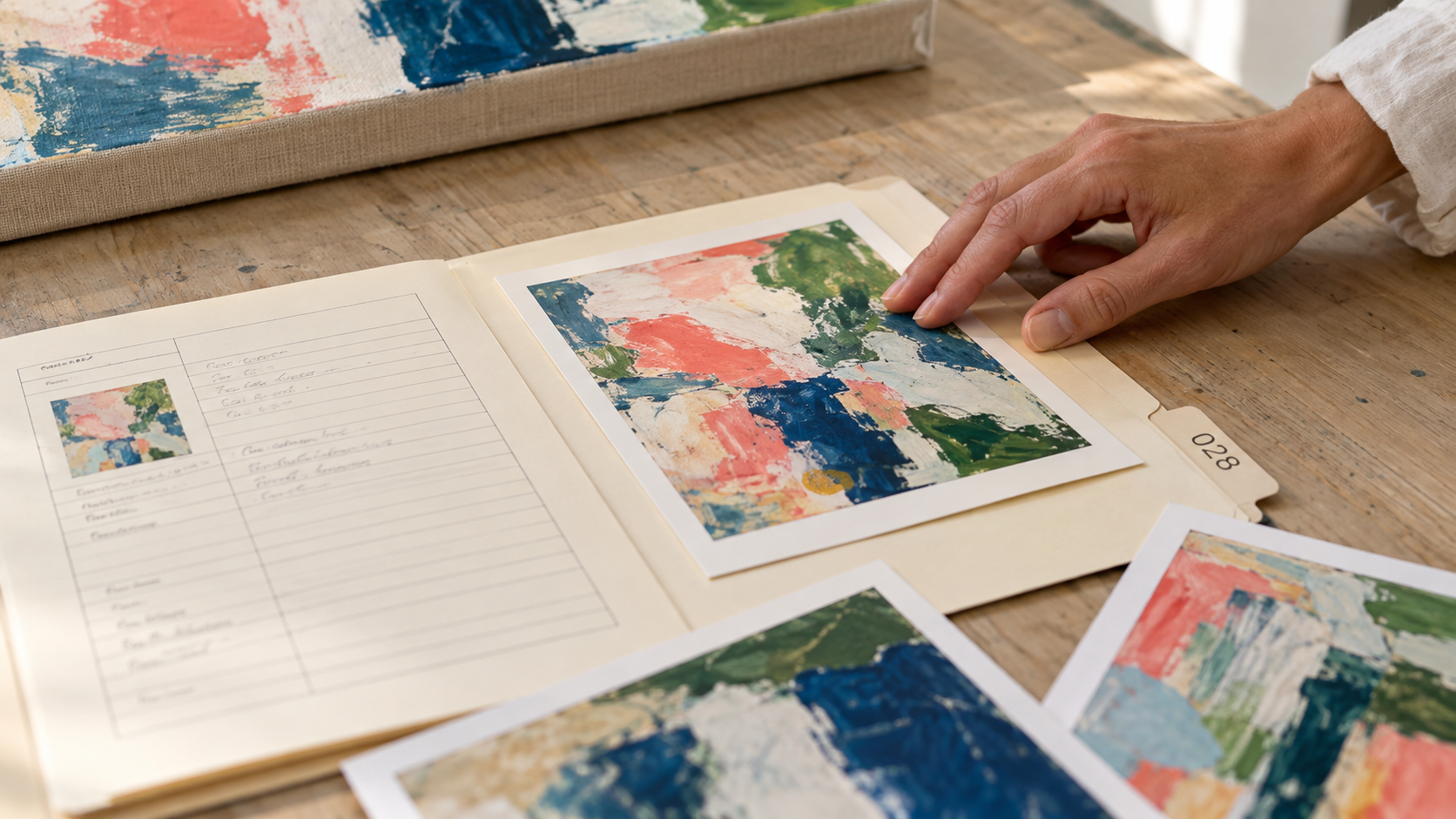
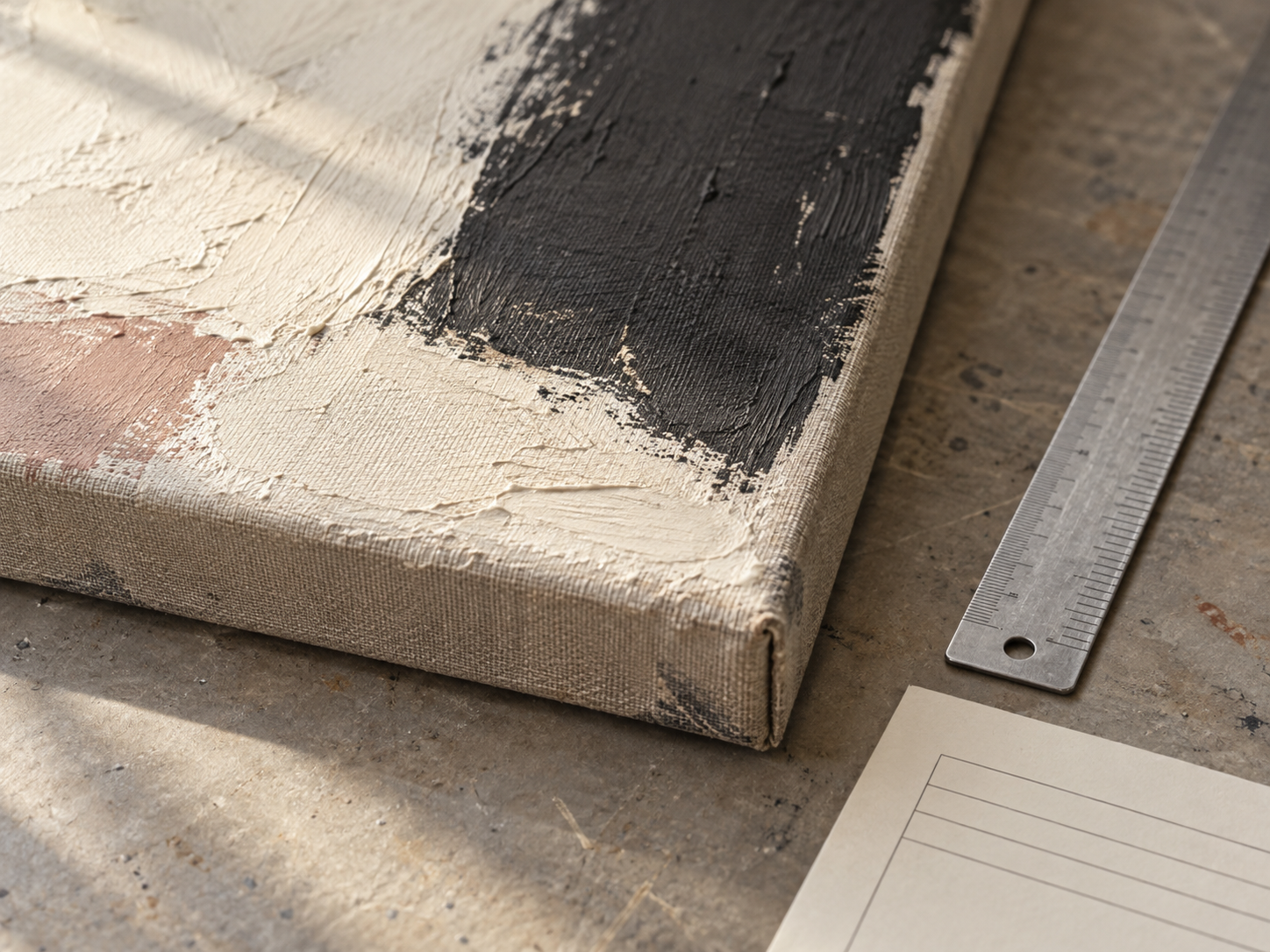
We photograph and catalogue the artwork, organize it into collections, and connect each piece to a clear record: title, date, medium, dimensions, location, and status. Available work, sold pieces, and works held in the archive remain easy to distinguish.
Images, physical works, and inventory records become one usable system. As new work is made or a piece moves or sells, the records can be updated—giving the artist a reliable foundation for exhibitions, inquiries, and future planning.
Process illustration — archive & documentation.
03
Give the work a home online.
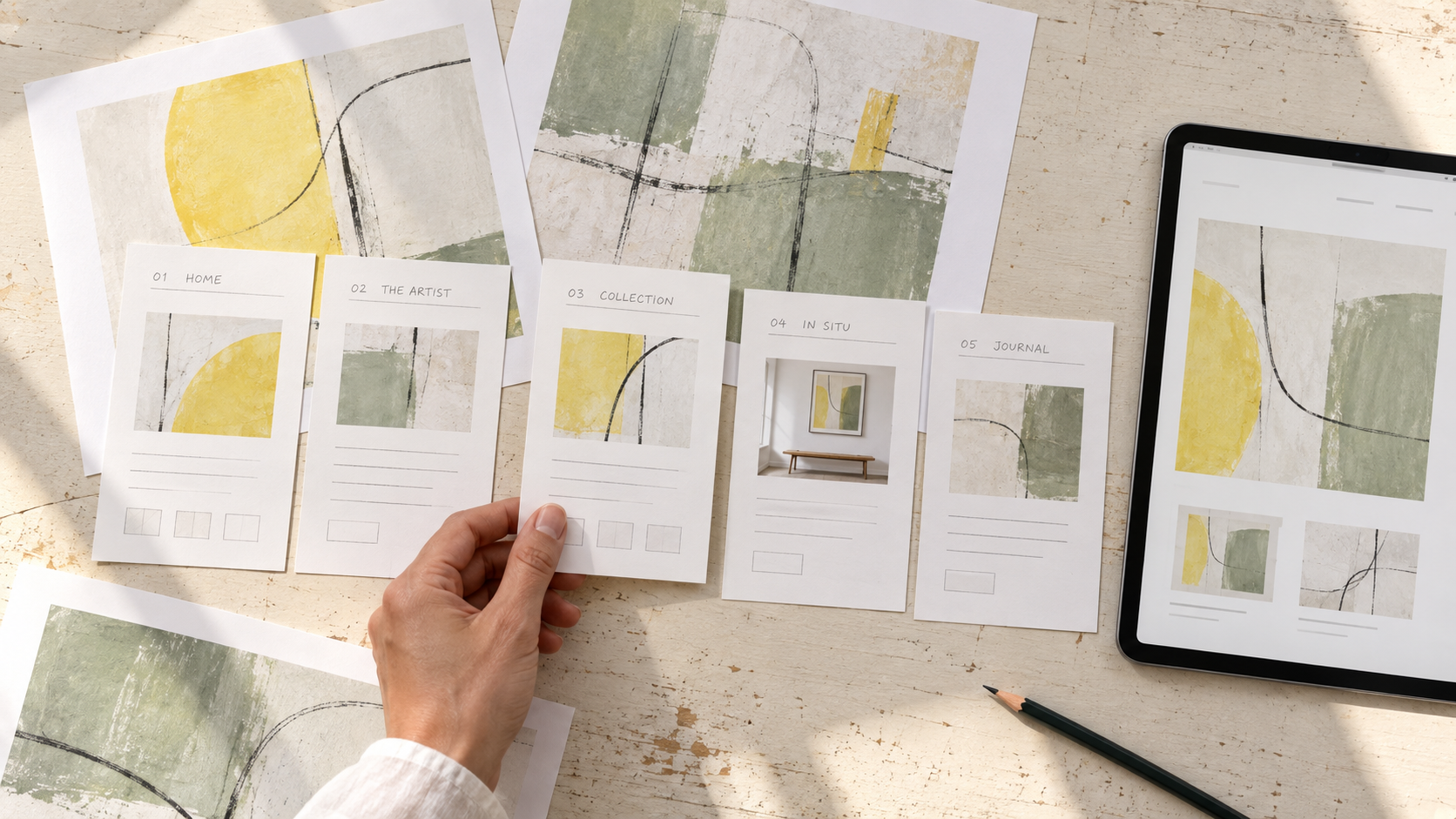
Organizing an artist’s online presence is an extension of organizing the studio. We review what is already online, clarify the artist’s story, and create or refine the website and social channels. Photography, collections, biography, and artwork information come together in a consistent presentation.
The experience helps viewers learn about the practice and spend time with the art from home. Close details, full views, context, and thoughtful pacing invite a sustained look, with a clear way to ask about a work when interest develops.
04
Find its place in the market.
We research comparable work and relevant markets, consider the artist’s history, and identify the collectors, galleries, and other audiences most likely to connect with the practice. That research gives pricing and outreach a shared foundation.
Together with the artist, we establish a clear, consistent pricing structure and decide where to focus first. The aim is a considered position for the work and a practical direction for bringing it to market.
05
Create paths to the work.
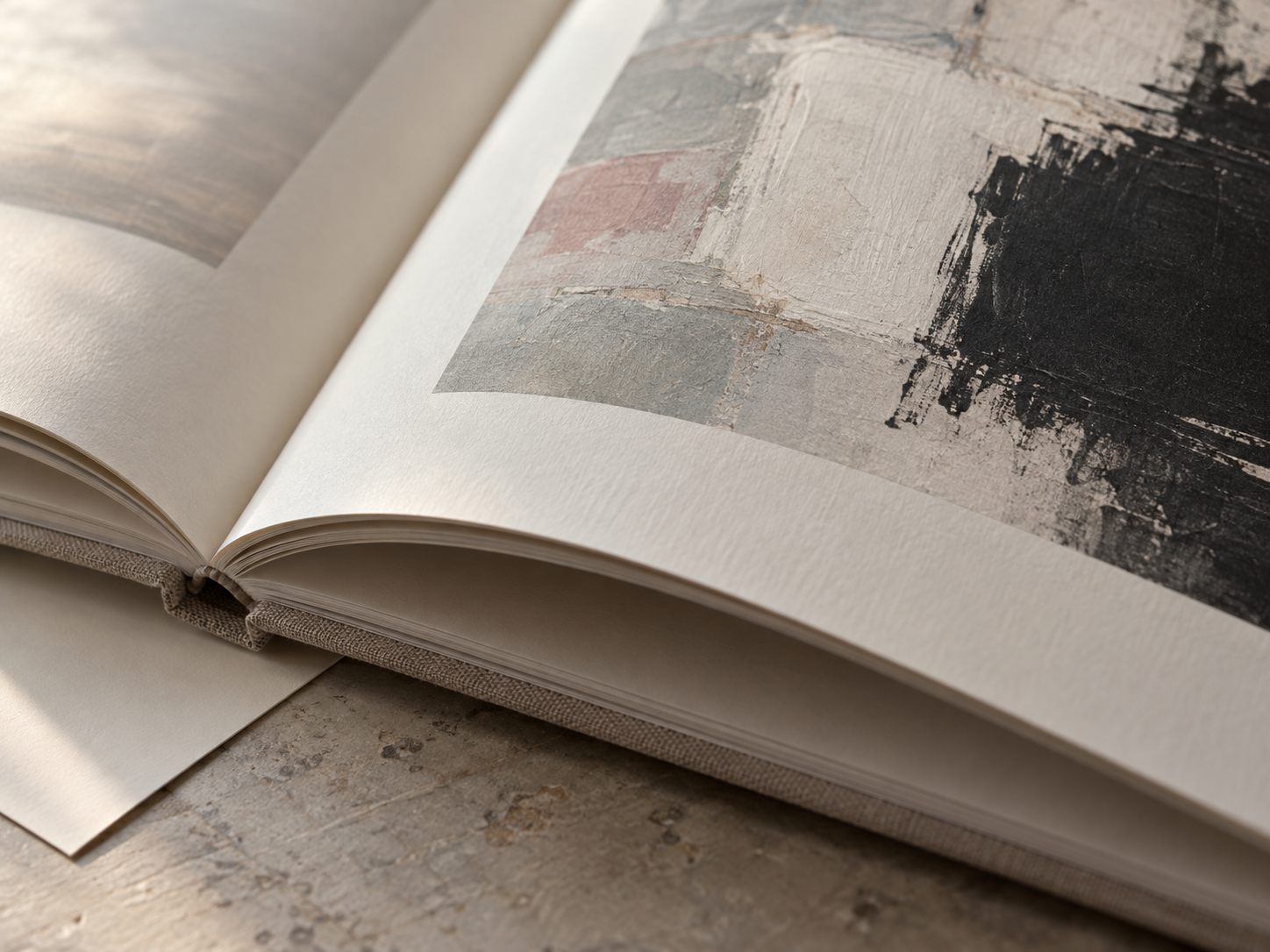
We turn that direction into catalogues, artwork sheets, and print materials that carry the story beyond the screen. We pursue gallery placements and establish suitable ways to view, inquire about, and purchase the work.
Each opportunity is supported by clear images, artwork details, pricing, and current availability. Presentation studies can help a collector imagine scale and setting, while the inventory keeps the information connected to the physical piece.
Process illustration — presentation & outreach.
06
Build relationships that last.
We identify strategic partners whose spaces, audiences, and interests align with the practice, then develop introductions and collaborations with a clear purpose. The aim is a network of relationships that can grow with the artist.
Collector care continues beyond the first inquiry or sale: answering questions, sharing the story behind a piece, following up, and introducing new work when it is relevant. What we learn from those conversations informs the next stage of the practice.
Let’s start with your work.
Portnoo works with artists through focused projects and ongoing advisory. Each engagement is shaped around the body of work, the artist’s priorities, and the opportunities ahead. We establish a clear scope and sequence, bringing together the parts of the process that the practice needs—from the archive and its presentation to market development and collector relationships.
Tell us about the work, where things stand, and what you want to make possible.